Generative AI-Powered Chatbots: Transforming Patient Services in Hospitals and Clinics


77%
Did you know that over 77% of patients believe that the ability to book, cancel, or change appointments online would improve their healthcare experience? Meanwhile, the global shortage of healthcare workers is expected to reach 18 million by 2030, putting additional pressure on healthcare systems worldwide.
-Source: WHO
40%
Also, social media has become the new normal for patient engagement, with over 40% of patients using platforms like Facebook, Instagram, and WhatsApp to seek healthcare information or support.
-Source: Accenture

Social media is no longer just a place for casual interaction—it has evolved into a critical channel for healthcare providers to engage with patients, answer questions, and offer services.
In this article, we will explore how Generative AI-powered patient support chatbots are transforming patient care across digital platforms, improving access, enhancing communication, and delivering greater efficiency to healthcare providers.

Healthcare Facilities Access to Patients
Current Statistics and Facts on Healthcare Accessibility
As healthcare services move toward digital platforms, many patients now have the option to book appointments or seek support online. However, this shift to digital is not without its shortcomings. According to a survey by Accenture, nearly 55% of patients still experience significant delays or errors when scheduling appointments online, leading to frustration and inefficiencies in patient care.
24 Days
Waiting times are a persistent issue. In the U.S., patients wait an average of 24 days to get a booking with a specialist, with some regions seeing even longer delays. This delay in care can significantly affect patient outcomes and strain healthcare resources.
-Source: Merritt Hawkins
Real-World Data on Patient Access Challenges
The reliance on customer service calls or online forms to manage appointments and inquiries often leaves healthcare providers overwhelmed. Administrative teams, struggling with a high volume of calls, may inadvertently schedule errors or fail to respond to patient queries promptly, creating bottlenecks in service delivery.
65%
As reported by the American Hospital Association (AHA), more than 65% of healthcare administrators report being overwhelmed by the growing demand for online services, indicating the need for more streamlined, automated solutions.
Chatbots in the healthcare industry are helping to address these issues by enabling real-time interactions, minimizing delays, and offering patients a more reliable solution for their care.
Why Patient Service Chatbots are Mandatory
 Busy Phone Lines and Overwhelmed Staff
Healthcare facilities often deal with high call volumes, leading to busy phone lines and extended wait times. Customer service teams, already stretched thin, struggle to keep up with patient inquiries and appointment requests, resulting in frustrated patients who experience delays in getting the assistance they need.
 Inefficiencies in Online Portals
Though many hospitals and clinics offer online portals for booking appointments or accessing services, these platforms often involve complex, multi-step processes. Patients may need to fill out lengthy forms, navigate through various sections, or wait for manual confirmation. This process can be inefficient and time-consuming, causing errors in scheduling and delays in care delivery.
 High Risk of Scheduling Errors
Overburdened administrative teams handling both online and phone requests are prone to making mistakes, such as double bookings or incorrect scheduling. These errors create confusion and often result in missed or delayed appointments, which can negatively impact both patient care and clinic operations.
 Delayed Responses and Lack of Real-Time Update
Patients making appointments through traditional methods frequently face delays in receiving confirmation. Whether through calls or online portals, there’s often no guarantee of real-time updates. This lack of immediate feedback leads to uncertainty, adding stress to patients who expect instant confirmation and reassurance.
 Lack of Timely Information
Patients frequently struggle to get updates on appointments, prescriptions, or test results. Generative AI patient chatbots deliver real-time updates, reducing the risk of missed information and keeping patients engaged and informed.
 Lack of Personalization
Traditional support systems struggle to offer personalized responses tailored to individual patient needs. Instead, patients often encounter generic information that fails to address their specific situations, contributing to a less satisfying care experience.
Introducing Smart & Secure Hospital & Clinic Chatbots for Patients
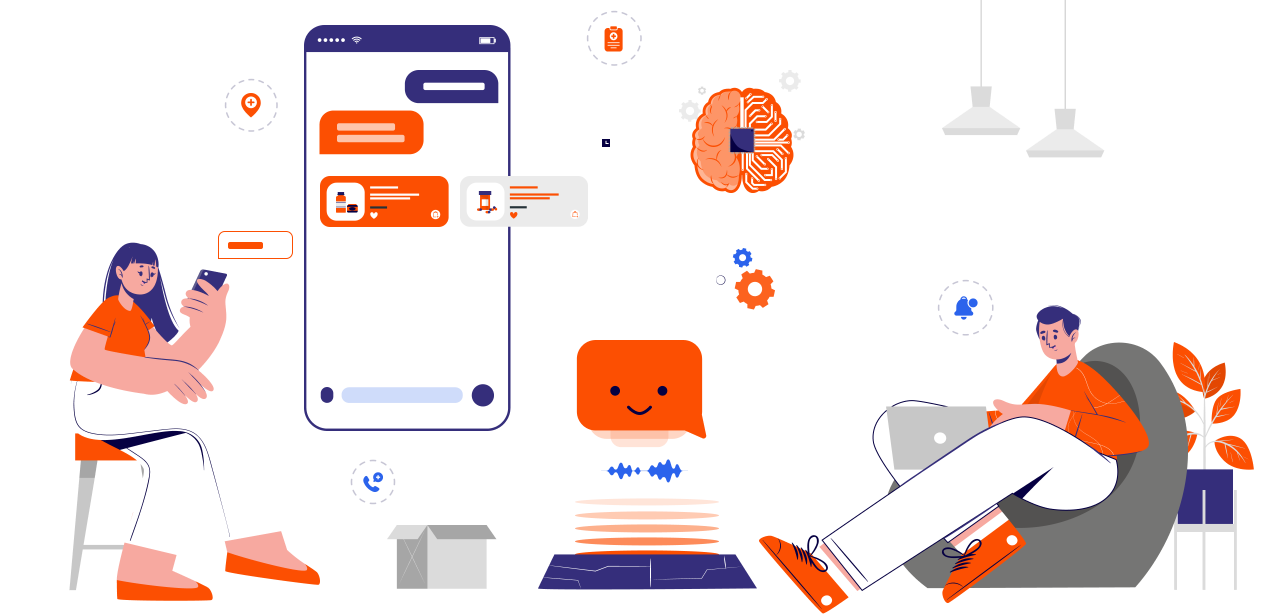
Moving beyond traditional, script-based systems, these conversational healthcare bots leverage Natural Language Processing (NLP) technologies like IBM Watson, Google DialogFlow, and Amazon Lex to understand and adapt to the specific needs of patients in real-time. This creates a more dynamic and engaging experience, allowing for smoother communication between patients and healthcare providers.
Key Use Cases of Generative AI-Powered Patient Support Chatbots
 Streamlining Appointment Scheduling and Reminders
Appointment scheduling chatbots simplify the process by allowing patients to book, reschedule, or cancel appointments instantly. Automated reminders help reduce no-show rates, improving clinic efficiency and keeping schedules running smoothly.
 Ambulance Booking Chatbot
In emergency situations, Generative AI-powered patient support chatbots can assist patients in booking ambulances. By providing real-time availability, location tracking, and estimated arrival times, these chatbots ensure that patients receive urgent transportation quickly and efficiently.
 Prescription Refills and Medication Management
Patients can manage their prescriptions effortlessly with AI chatbots. They can request refills, receive notifications about medication availability, and even coordinate pickup times, reducing delays in treatment.
 Patient Query Resolution and Information Sharing
AI chatbots provide patients with real-time answers to common questions, such as clinic hours, insurance coverage, and treatment options. This reduces the workload on administrative staff while ensuring that patients receive accurate information quickly.
 Escalation Handling for Urgent Inquiries
Virtual medical assistants can identify when an issue requires human intervention and escalate the query to the appropriate department. This ensures that urgent matters are handled promptly and effectively.
 Handling Post-Treatment Service Requests
Following treatment, virtual health assistants can assist patients by scheduling follow-up appointments and coordinating aftercare. This ensures that patients continue to receive the necessary support throughout their recovery process.
 Assisting with Medical History Updates
Patients can use medical chatbots for patients to update their medical histories or share relevant health data with their care providers. This ensures that healthcare professionals have the most accurate information when making treatment decisions.
 Managing Doctor-Patient Communication
Patient engagement chatbots facilitate communication between patients and healthcare professionals, enabling patients to send non-urgent messages, request updates, or ask follow-up questions without needing to schedule a full consultation.
 Insurance Verification and Claims Assistance
AI chatbots help patients verify their insurance coverage and guide them through the process of submitting claims, reducing the administrative burden on both patients and staff.
 Pre-Operative and Post-Operative Support
AI chatbots can provide patients with pre-operative instructions and post-operative care guidelines, ensuring they are well-prepared before surgery and adequately supported afterward.
 Virtual Check-Ins for Chronic Disease Management
Patients with chronic conditions can use online patient consultation chatbots for regular virtual check-ins, receiving reminders for medication, or scheduling recurring appointments. This consistent monitoring helps improve the management of chronic diseases.
Key Differentiators of Generative AI-Powered Patient Support Chatbots
 Multilingual Support
These chatbots support over 38 languages, ensuring that patients from diverse backgrounds can communicate in their preferred language, making healthcare more inclusive and accessible.
 Advanced Data Handling
With sophisticated algorithms, Generative AI-powered patient support chatbots process patient data accurately, delivering precise, relevant responses for better healthcare outcomes.
 Seamless Integration
The chatbots integrate smoothly with existing healthcare systems like EHRs and CRMs, ensuring consistent data flow and improving operational efficiency.
 Natural Interaction
Whether through text or voice, AI in patient care chatbots adapt to the patient’s preferred communication style, creating a more intuitive and personalized experience.
 Live Agent Handoff
When needed,chatbots for patients seamlessly transition complex queries to live agents, ensuring that patients receive the best possible care.
 Data-Driven Insights
The chatbots analyze patient interactions to generate valuable insights that help healthcare providers improve decision-making and enhance patient care.
 Consistent Multichannel Experience
Hospitals & clinic chatbots for patients deliver consistent service across multiple platforms, including websites, mobile apps, and social media, ensuring patients receive the same high-quality care regardless of the channel.
 Healthcare Expertise
Equipped with extensive healthcare knowledge, these chatbots assist with tasks like appointment scheduling, medication management, and general inquiries, providing reliable patient support.
 Continuous Engagement
Patient chatbots maintain ongoing communication with patients by following up through email or notifications, ensuring that care extends beyond the initial interaction.
Flexible Pricing Options
 Capex Model
You can choose to buy the product with an upfront amount
 Opex Model
You can choose to Subscribe to our Bot for a fixed monthly charge.
 Pay-Per-Usage
Pay only for active usage
 Multi-Tenant Bot starts at $99/Month Single-Tenant Bot starts at $999/Month

Ready to Transform Your Patient Services?
Transform your patient experience with Generative AI-powered patient support chatbots.Ensure every patient receives timely, personalized care while streamlining your operations.
Explore a demo today and see how these intelligent solutions can elevate your healthcare services.